Remembering Max Payne 3: A Deep Dive into the Noir Shooter
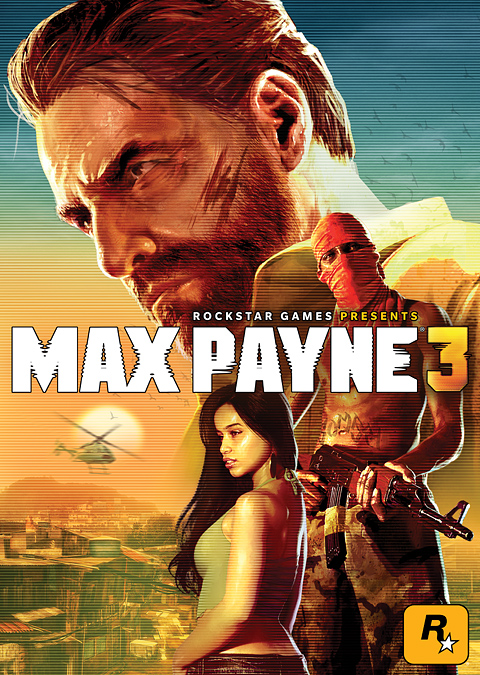
🎮 For the PlayerMax Payne 3 is a third-person shooter that continues the story of the titular character, Max Payne, as he navigates the criminal underworld of São Paulo, Brazil. The game is known for its intense action sequences, bullet time mechanics, and a gripping narrative that delves into themes of loss, revenge, and redemption.
🔧 For the CreatorMax payne 3 has the DNA of Rockstar Games. It is a technical marvel that pushes the boundaries of what is possible in a third-person shooter. The game's engine, physics, and AI systems are all top-notch, providing a seamless and immersive experience for players. In this deep dive, we will explore the development process, design choices, and technical achievements that make Max Payne 3 a standout title in the gaming industry.
⚙️ The Pixel: The Craft
While it was published by Rockstar, it was initially developed by the Finnish studio Remedy Entertainment, written and directed by the adorable Sam Lake. Released in 2001, Max Payne is about a man named Max Payne.
Wow, I couldn't have seen that coming.
He's named as such because the entire point of his character is that he has lived the absolute worst life any human being could hope to live. Spin the Wheel of Fortune on childhood trauma... This guy's been through it all.
You can tell Sam Lake is a huge fan of names with double—or literal—meanings. But he wasn't always meant to be called Max Payne. No, Before Max Payne, he was... Max Heat.
Yeah, They even spent twenty grand trademarking that before deciding on Payne. I imagine that took all of their brain cells rubbing together.
Max Payne is a detective with the NYPD who goes home one evening to find-
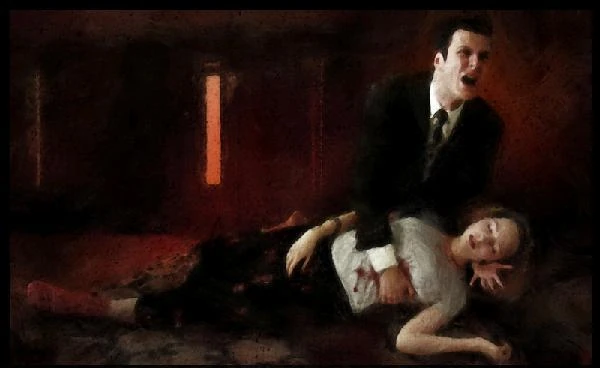
How the fuck can a detective own a house this big in the suburbs on a police officer's wage? It's a fucking mansion! I guess all of that bribe money went toward the mortgage.
He goes home to find his loving wife and daughter...murdered by crackheads. And this is the catalyst that begins Max's descent into a violent, drug-fuelled rampage against the Mafia.
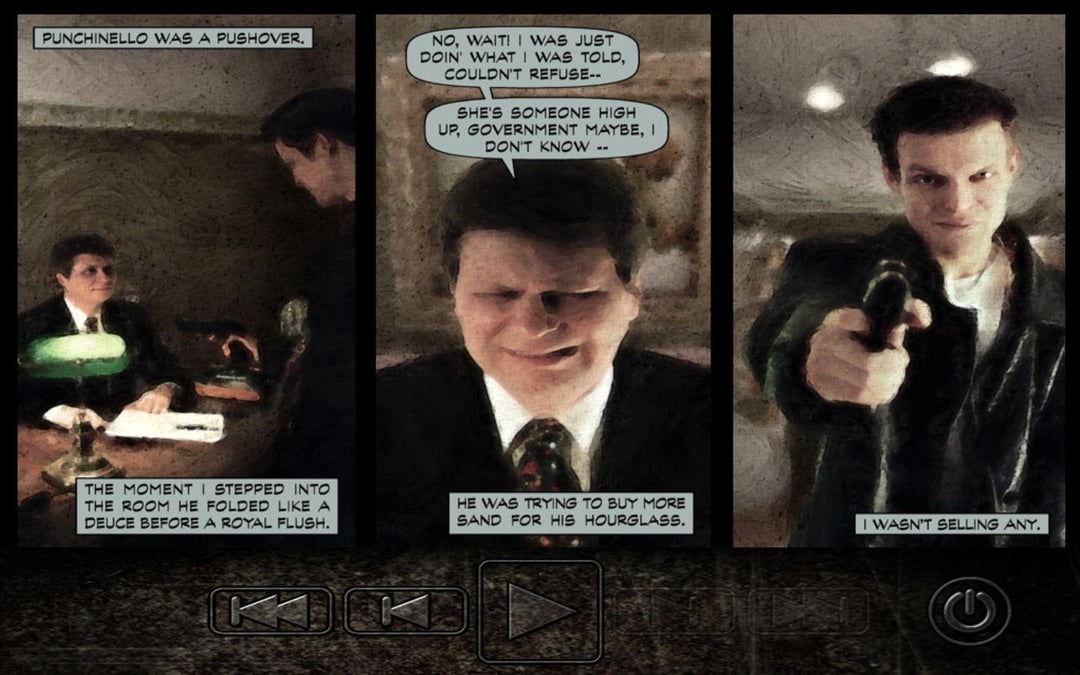
The cutscenes are presented in comic-book format, and all the characters are played by members of the development team and their families—including, of course, Sam Lake himself playing the titular Max Payne.

This was done because the game had an incredibly low budget, which makes their achievements all the more impressive. The comic-book cutscenes are definitely a classic case of limitations breeding creativity. They're so iconic they're probably one of the first things you remember about the game after all these years—and for good reason. The script is tight, witty, and brooding.
Coupled with the background music, it almost perfectly establishes the gritty—albeit tongue-in-cheek—noir aesthetic Remedy was inspired to create.
Visually, the game holds up wonderfully. The texture work is excellent and incredibly detailed for its time. It might look basic by today's standards, but everything pops exactly as it should, and nothing in the game world feels out of place or lacking in content. These places still feel like real-life places. The heavy atmosphere and absolutely crisp sound design are wonderful for immersing you in the game's absolutely bonkers combat system.
Bullet Time
Bullet Time is the trademark mechanic that allows Max to dive through the fucking air in slow motion with guns blazing.

It was a massive part of the game's appeal and one of its biggest selling points. But considering how Max is essentially a glass cannon, it emphasizes the need for constant movement, dodging, and weapon switching if you're going to survive an encounter. The margin for error is incredibly small.
But in a good way.
Because when you fuck up, nine times out of ten you can tangibly understand why you fucked up. Usually it amounts to: You stood out in the open with your dick in your hands for too long.
Another major inspiration for the original Max Payne was the batshit gun-fu films of John Woo.
Hard Boiled, in particular. Speaking of inspirations...
The comic-book aesthetic, along with the whole angry dead-wife man in a trench coat kills criminals for shits and giggles thing, must have spoken to someone at Volition on a personal level...because they cooked up The Punisher game in 2005.
I have a lot less to say about Max Payne 2. It's still a good game. The new physics model they added to the world is brilliant. Didn't blow me away, but... It's alright. The game centres more around Max's survivor's guilt and his obsession with Mona Sax. It's a bit too melodramatic for my taste. And Bullet Time allows Max to move insanely fast with very few movement restrictions, making the game considerably easier than the first. But if you like the first game... you'll like the second one. Oh, and Max trips the fuck out in these games.
Why am I telling you all of this? This is supposed to be a video about the third game, right?
It's important to consider the context in which Max Payne 3 was created. It's impossible to look back on it without understanding what makes it such a divergence from the first two games. Not much is known about the early stages of the game's development.
From what I can tell, development began in 2005 and was initially headed by Rockstar Vienna before that studio was shut down and the project was transferred back to Rockstar North.
The only concrete information we have from that period consists of a handful of concept-art pieces and early screenshots. They're very reminiscent of the aesthetic of Max Payne 2. But the most interesting concept from the game's early development was that it was originally supposed to take place in... Russia.


But for whatever reason, the Houser brothers abandoned the Russian setting in favour of Brazil. Possibly because they had been watching a lot of Brazilian cinema at the time. A lot of Rockstar's stories are directly inspired by—and constantly reference—crime dramas.
With Max Payne 3, both stylistically and narratively, it's very obvious how much influence the 2004 film Man on Fire had on the game. They also cited Tropa de Elite as a major inspiration. The game was formally announced in March 2009.
People were fucking pissed.
When the first trailer and screenshots dropped—all taken from that one favela mission halfway through the game, showing Max's new bald-headed design... People fucking hated it.
He looked completely different from the original Max. The contrast between the sun-bleached streets of São Paulo and the noir atmosphere of New York gave pretty much everyone severe whiplash. It also didn't help that Rockstar initially didn't intend to cast James McCaffrey as Max's voice actor. The hype was anaemic. Early screenshots and teaser trailers had already soured people's hopes for the upcoming sequel. Even today, the view counts on those trailers are surprisingly low for a typical Rockstar release—and that's after thirteen years online. Then the game came out. And... Oh my Lord, It sold well. Well enough, to be fair, Just not by Rockstar standards. People really didn't know what they had back in 2012. I'm also sure the game was overshadowed by the insane number of other kino releases around the same time. But over the last few years, people have really begun to appreciate Max Payne 3. You could even say it's become a bit of a cult classic nowadays. I don't want to get too bogged down talking about the behind-the-scenes development. I've already wasted enough time as it is. For now, I just want to get into the more interesting shit. For me. And for you.
The Comics
Yes, Rockstar released a three-issue comic series for Max Payne 3, written as a collaboration between Dan Houser and Sam Lake. A meeting of the fucking minds, indeed. Produced by... Marvel.


The comics serve to bridge the gap between Max Payne 2 and Max Payne 3, giving us more insight into Max's life before the "shit-eating grin." His father was abusive. His mother was an alcoholic. Yeah... and they both died when he was young. This guy's life... fucking sucks.
The artwork is genuinely really nice. It's a good blend of the aesthetics from both games. But for the most part, it's just Max narrating how much his life fucking sucks while repeatedly reliving his PTSD before his arch-nemeses... Italian men, show up to harass him.
The comics don't really provide much beyond additional context for what happened to Max after the second game. They're a nice homage to the original comic-book presentation. Obviously comic-book cutscenes don't really have a place in the third game itself.
Now that we've covered the basics... It's finally time to delve into what you've all been waiting for.
The intro is fucking amazing. The direction and cinematography are first-class, seasoned by James McCaffrey's haunting narration as Max Payne.

This shot—of Max glancing toward the duffel bag while the camera tilts slightly off-angle—has stayed with me ever since I first played the game. It subtly suggests that he's struggling against an overwhelming temptation. It's only when he reaches into the bag and looks at the photograph of his family that he finally gives in. Max is an alcoholic. The pain from the previous two games is simply too intense for him to bear alone. Instead, he numbs himself with a cocktail of Scotch whisky and the painkillers he's been popping for eleven years.
Yes, Those pills you collected throughout the previous games have culminated in a full-blown addiction. And it's fucking heartbreaking listening to him lie to himself about his "fresh start" in Brazil. Because the truth is... He hasn't moved on at all. One thing you'll learn to appreciate about this game is the language of its music. I'll go into the soundtrack—and the band who composed it—later. But for now, let's focus on the main theme. It stands in stark contrast to the main theme from Max Payne 2.
That earlier score, bombastic as it is, communicates Max's dramatic and tragic downward spiral. By comparison, the main theme of Max Payne 3 evokes only two words in my mind:
Rock bottom.
When you've fallen as low as it's possible to fall and the only company left to keep you is the memory of every tragedy that's ever happened to you. But it's cathartic being able to identify with this character's struggles and the journey he endures to finally put his demons to rest.
Like the previous games, we begin at the very end of the story, left wondering what the fuck is going on and what kind of mess Max has gotten himself into this time... before slingshotting back several weeks. It's here that we learn Max, having left the NYPD, is now working private security for the wealthy Bronco family.
Gameplay
And here we get into the gameplay. The combat is good. Very good, even.
Enemies go down in just a few shots. The blood spray effects are viscerally satisfying, and Max Payne 3 makes very liberal use of GTA IV's Euphoria physics engine and its active rag-doll system.
The physics add a tremendous sense of weight to the combat. Enemies recoil and clutch at their wounds when shot, and they collapse like sacks of fucking potatoes. Absolute kino.
I will say, though, you're incredibly limited in your arsenal at the beginning of the game. For most of the opening level, you've got little more than a pistol—or, if you're lucky, an old shotgun. But every level introduces new weapons that gradually increase in power and versatility.
You're always on the move, Always finding new tools, Always finding new ways to use them.
Since Max can only carry one primary weapon and two sidearms—and because ammunition is genuinely scarce—you aren't just encouraged to adapt...You're forced to.
You'll constantly swap weapons and adjust your tactics on the fly. So... Yeah. Absolutely kick-ass. This gets an A-star from me.
Sweat
One of my favourite details in the entire game is something incredibly small.
Because Brazil is absolutely boiling—and Max spends every level sprinting around while getting shot at—his clothes gradually become soaked with sweat. If he's wearing a jacket, you won't notice it very much. But once he's down to just a shirt—or eventually his tank top—you can actually watch the sweat patches slowly spread across the fabric.
I bet this motherfucker stinks.
Flashback
The fucking leather jacket is back. Honestly, the New Jersey storyline feels almost completely self-contained from the main Brazilian plot. But it's absolutely essential for Max's character arc. The framing is genuinely fascinating. The local Mafia boss wants Max dead because Max killed his son. Although he only appears for what feels like three seconds of screen time...
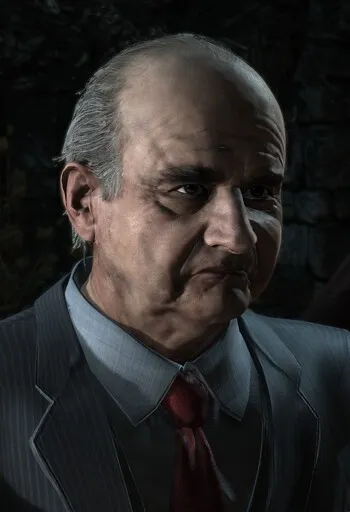
Anthony DeMarco would have made an excellent villain. Despite being about the height of a garden gnome, he's incredibly intimidating. He's fuelled entirely by grief and rage. And the actor is giving an Oscar-worthy performance. I honestly think, under different circumstances, this premise could have carried an entire game by itself.
Golden Guns
These New Jersey levels are among the most linear in the game—the first one especially—but that doesn't mean there isn't anything worth seeing. Like the rest of the game, they're scattered with Golden Gun Parts.
Every weapon has three separate pieces you can collect to assemble a gold-plated version. Max thinks he's Saddam Hussein, I guess. By default, golden weapons receive a 10% damage increase, which is nice enough. But some weapons—like the M1911 and the MP5—also receive extended magazines, making them substantially more useful on the harder difficulties.
Graphics
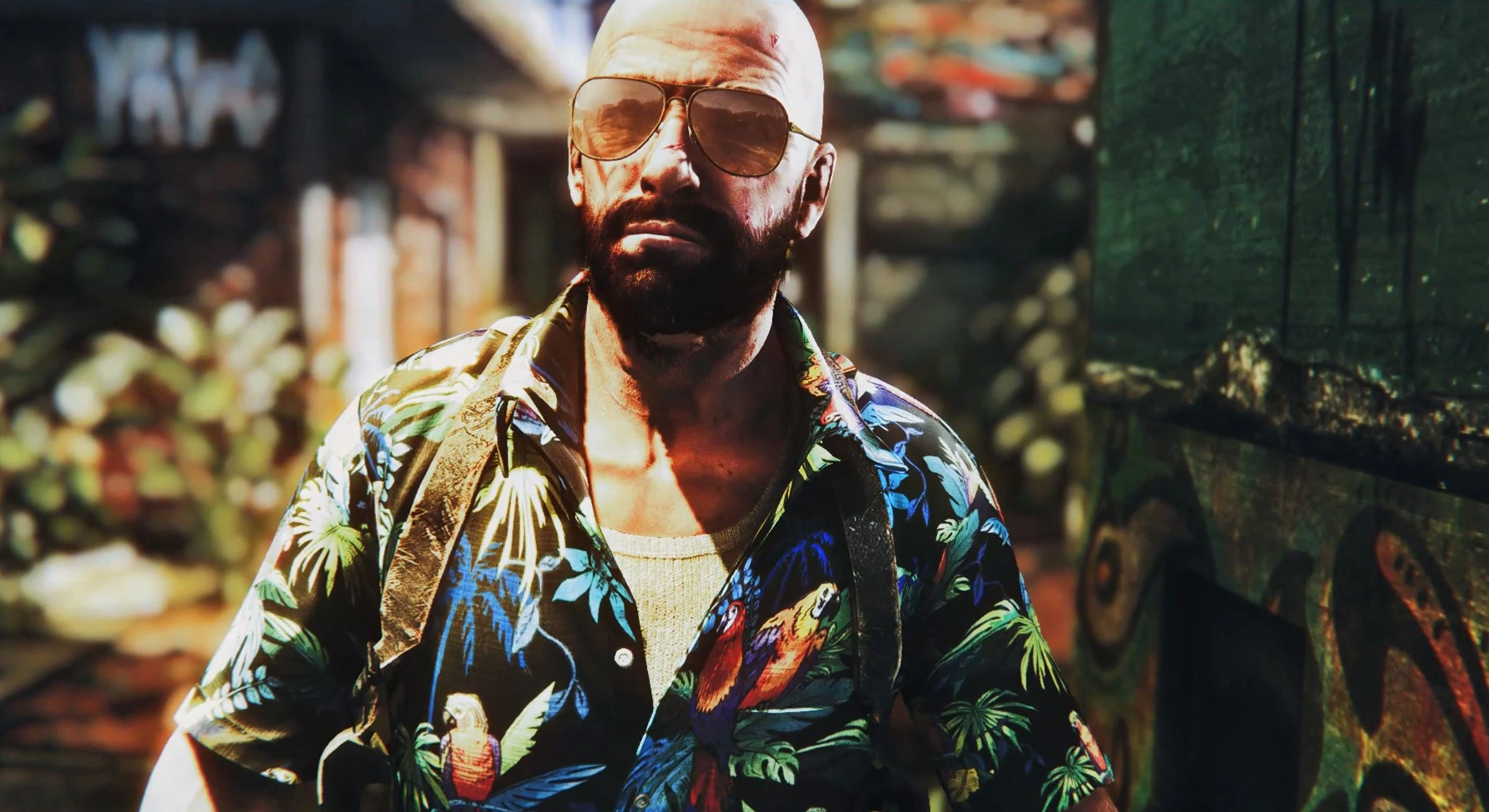
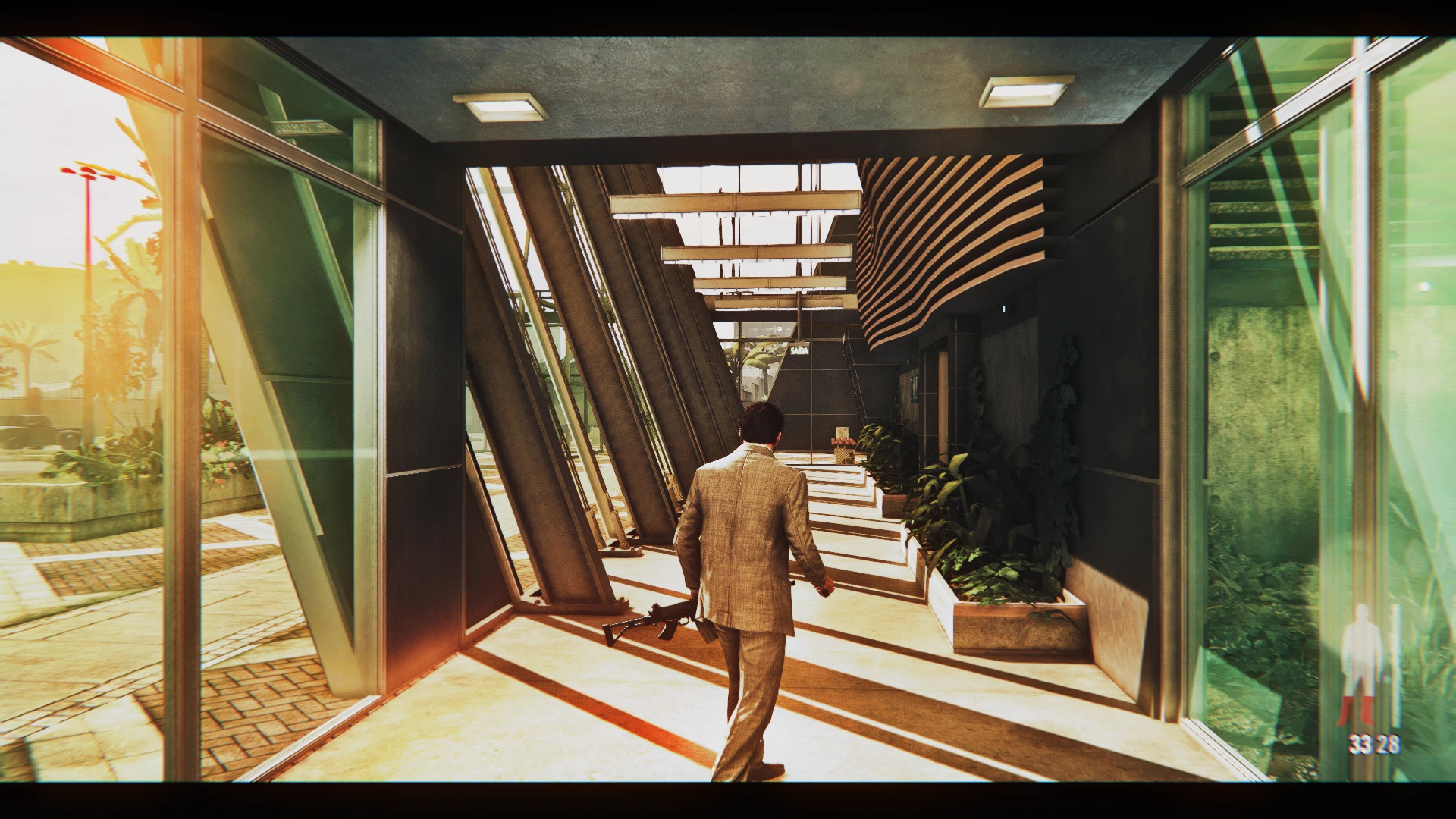

Can we just take a second to appreciate how gorgeous this game still looks?
Even by 2012 standards—which, admittedly, were already pretty good—it holds up astonishingly well. Honestly... Better than GTA V.
Just like Manhunt, the game's linear level design allowed Rockstar to go absolutely all-in on graphical fidelity. And somehow... It doesn't consume half my hard drive in the process. Even the texture work on people's skin makes me uncomfortable. Their faces look leathery, Dry and Weathered. But in a way that feels strangely natural. Well... As natural as skinwalkers can look.
Back To Brazil
Cutting back to the present, Max infiltrates the docks in an attempt to rescue Fabiana. As he approaches, he reflects on the situation. He shouldn't have been drinking while working security. But at the same time... He was one man against an impossible situation. Hundreds of armed kidnappers. Still... That guilt becomes extremely important later.
Stealth
So... We begin our stealth mission. Max infiltrates the docks in an attempt to rescue Fabiana. It goes about as well as you'd expect.
Fun fact:
This is one of only two levels in the entire game where you can find a hidden Desert Eagle, tucked away inside a trailer near the docks. I always found that strange. The Desert Eagle is basically Max's signature pistol throughout the game's promotional artwork.

The weapon itself is pretty solid. The only downside is that its rounds travel noticeably slower than the other pistols. You actually have to lead your shots.
Unfortunately... The kidnappers escape with Fabiana once again. Max immediately discovers exactly what gave his father nightmares as he recreates Apocalypse Now by blasting his way upriver. It should also be mentioned that Max Payne 3 has the highest body count in the trilogy. Estimates put Max's kill count at somewhere over 1,200 people.
The man is a walking natural disaster.
Health
Instead, I'll use this opportunity to finally address the soundtrack... and its composers.
Health.

At the time, they were still very much a fringe alternative indie band, so it was an enormous risk for Rockstar to commission them to score the entire game. Honestly... The gamble paid off. The result is, in my opinion, one of the greatest video game soundtracks ever composed. It also helped propel Health to the level of recognition they enjoy today.
Every track is orchestrated around its respective scenario and evolves alongside the gameplay perfectly. Health's trademark industrial noise-rock style blends seamlessly with more sombre instrumentation, subtly reinforcing the game's Brazilian setting. The New Jersey chapters, in particular, strike a perfect balance between this new musical identity and the melancholy atmosphere of the original games.
Take the track "Dead."
Front and centre, it features the sound of Max's infant daughter crying... as though the memories of the day he lost his family are still echoing inside his mind. Every single piece of music in this game is exceptional.
But...
There is one track that stands above the rest. We'll get to that one later.
Panama
Panama, back when Max was still drowning himself in alcohol. If you didn't catch it earlier...
It's heavily implied that the woman Marcelo is obsessing over... is Fabiana. His own brother's wife.
If this yacht looks familiar—even if you've never played Max Payne 3—it's because Rockstar later copied the design almost wholesale into GTA Online's Yacht Update... and charged players what amounted to something like sixty dollars' worth of in-game currency for it. Just good business.
The Airport
This... Is the moment the entire game has been building toward. From the opening scene, The airport. This is easily one of the greatest finales in video game history. From beginning to end... It's an adrenaline rush. Max pushes relentlessly toward Victor Bronco's private hangar.
"Tears"

We finally have to talk about "Tears."
Not only is it an absolute banger... It's easily the best track in the game. It's also deeply personal to Max's story. The lyrics almost feel like the voices of everyone he's lost.
His wife, His daughter, Mona. Urging him... Begging him... To finally let them go, To move on, To become a better man.
"What you want..."
"Now..."
"Time to let me go..."
Ending

I genuinely adore this ending. After everything... After all the misery... All the alcohol... All the self-destruction, We're shown something incredibly simple.
Max sits alone at a beachside bar. He's drinking A bottle of soda, Not whiskey, Not painkillers... Just soda. He lights a cigarette. For the first time in the entire game...
He actually looks...
Happy.
He even smiles.
Final Thoughts
So... Overall? It's alright, I guess. Not that special. Just Kidding
I think Max Payne 3 is a great game. I find Max's journey genuinely inspiring. He drags himself up from rock bottom. He takes control of his life again. He kills an absolutely absurd number of terrible people. And...
He finally earns the happy ending he deserves.
For me... That's unbelievably cathartic. This is easily one of my all-time favourite games.
What's Next?
As for Max Payne's future...
Remedy Entertainment is currently developing remakes of the first two Max Payne games, published and fully funded by Rockstar Games.
Sadly... These remakes won't feature James McCaffrey as Max.
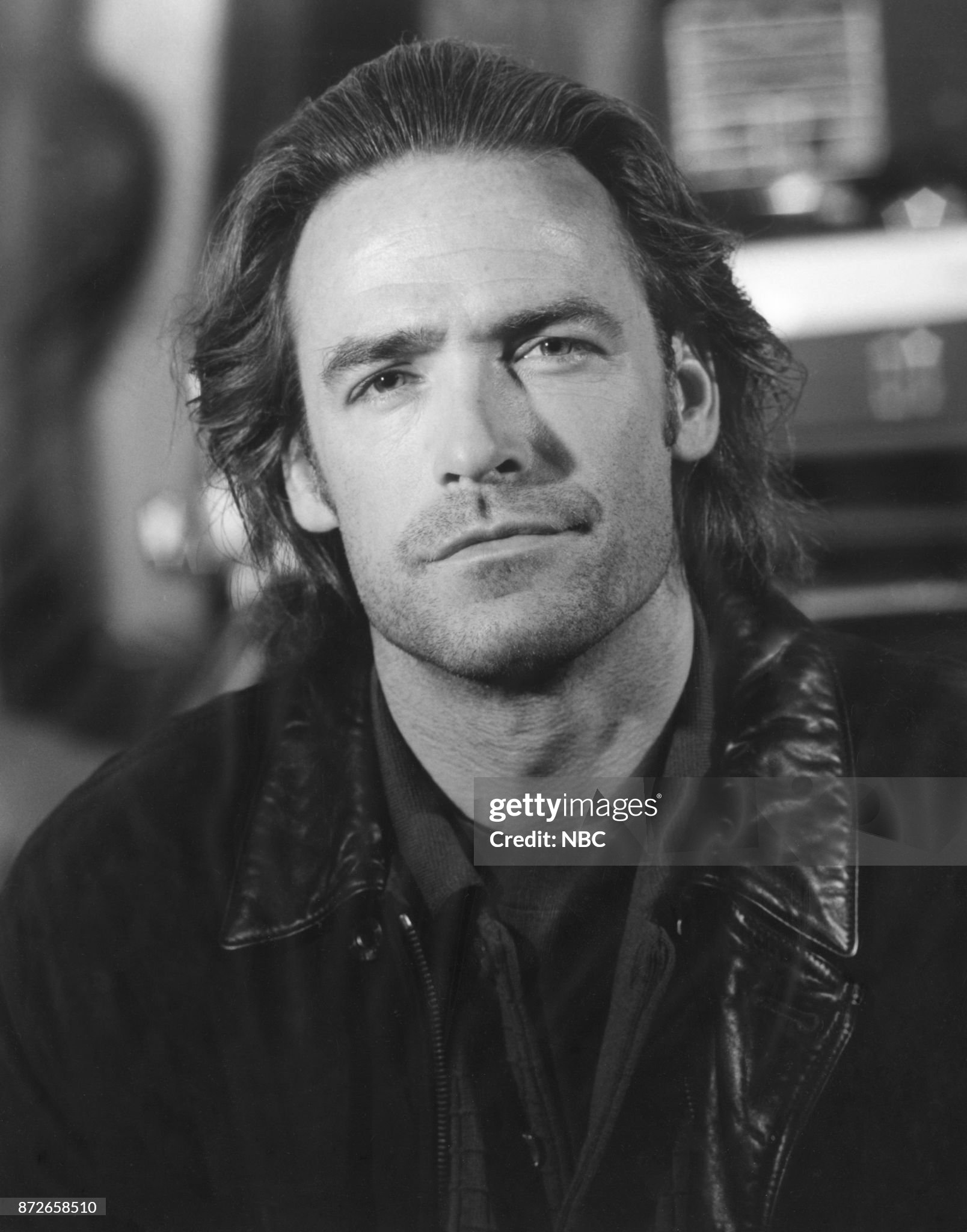
We lost him in December 2023 after a battle with cancer. He was 65 years old. He'll be sorely missed. I genuinely believe he was one of the greatest—and most underutilized—voice actors in gaming history. He truly made Max Payne his own. No one else could have brought the character to life quite the way he did.
Max Payne 3 will always mean a great deal to me. Whatever anyone else thinks...
To me, it's Rockstar's magnum opus, right alongside GTA IV. I find myself replaying it every few months because... It hit my life... Like crack hit Detroit in the '80s.
📖 The Story: The Impact
🔗 The Connecting Thread
It showed us what it means to find peace after the chaos. It was a revolution in 3rd person shooter game.
💬 Community Question
Do you think Max Payne 3 is a good game? Does this game does justice to the Max Payne legacy?
💬 Comments
Hi this is abhishek mishra game dev options
checking reply status
You should not reveal your name that way dawg!!!